In today’s fast-paced world, maintaining a strong immune system is more important than ever before. With various environmental factors, stress, and the ongoing pandemic, it is vital to prioritize our health and well-being. One effective way to support and strengthen our immune system is through the use of immune whey protein.
Whey protein has long been popular among athletes and fitness enthusiasts for its muscle-building properties. However, immune whey protein takes its benefits to a whole new level. It is specifically designed to support and enhance the body’s natural defense mechanisms, making it an excellent addition to a healthy lifestyle.
So, what exactly is immune whey protein? It is derived from milk and contains a high concentration of essential amino acids, vitamins, minerals, and immune-boosting compounds such as immunoglobulins and lactoferrin. These components work together to promote a robust immune response and help the body fight against pathogens and infections.
One of the key benefits of immune whey protein lies in its ability to increase the production of glutathione, a powerful antioxidant. Glutathione plays a crucial role in maintaining the immune system’s functionality and protecting our body from harmful free radicals. With an ample supply of glutathione, our immune cells can work efficiently to eliminate toxins and invaders, reducing the risk of illness and improving overall health.
Moreover, immune whey protein contains high levels of branched-chain amino acids (BCAAs) like leucine, isoleucine, and valine. These amino acids are essential for supporting muscle recovery and preventing muscle breakdown. By preserving and building lean muscle mass, our body becomes stronger, enabling us to better withstand illness and stressors.
Additionally, immune whey protein is rich in bioactive peptides, which are small protein molecules that have a range of health benefits. These peptides have been shown to possess antiviral, antibacterial, and antifungal properties, providing an extra layer of defense against pathogens. They also help regulate immune responses, balance inflammatory processes, and support overall gut health.
Incorporating immune whey protein into your daily routine is simple. It can be consumed as a powdered supplement, making it easy to blend into smoothies, shakes, or even your morning coffee. Alternatively, it can be taken in capsule form for those who prefer a quick and convenient option. Regular consumption, coupled with a balanced diet and regular exercise, can have a positive impact on your immune system over time.
When selecting an immune whey protein product, it is crucial to choose a reputable brand that uses quality ingredients and employs strict manufacturing standards. Look for products that are free from artificial additives, sweeteners, and fillers. Opting for a product derived from grass-fed, hormone-free cows can also ensure higher nutrient content and overall quality.
As always, it is essential to consult with a healthcare professional before making any significant changes to your diet or supplementation routine, especially if you have underlying health conditions or are pregnant or breastfeeding.
In conclusion, immune whey protein is a natural and effective way to boost and support your immune system. By incorporating it into your daily regimen, you can enhance your body’s defense mechanisms, promote overall health, and maintain an active and resilient lifestyle. Remember, a healthy body begins with a strong immune system!
Here is an overview of what it takes for your body type to achieve the desired results, along with precise dietary instructions and supplement recommendations.
To discover exactly what to eat to guarantee results, keep reading!
What is that in your bottle, and what does it do? We are frequently questioned about when we consume Xtend (BCAA, L-Glutamine, and Citrulline Malate) while working out.
But how often have you sat down at a restaurant and had patrons inquire how that meal would help your workout the following day? Most likely never.
We are here to inform you that achieving the ultimate goal of Bodybuilding—Fat Loss and Lean Mass Gain—is possible and fueled by the numerous meals you consume before exercising.
In this post, we will outline what it takes for your body type to achieve the desired results, along with the authentic foods to consume and supplements to take.
To discover exactly what to eat to guarantee results, keep reading!
Phenotypes
“The observable physical or biochemical characteristics of an organism, as determined by both genetic make-up and environmental influences,” is the definition of the term “phenotype.” (Dictionary.com).
Three phenotypes can be used to classify one’s body type or structure:
Ectomorph:
It is naturally thin with a narrow bone structure, which makes it difficult to put on weight.
Mesomorph:
Naturally athletic, with broad shoulders and the ability to gain and lose weight fairly evenly.
Endomorph:
Naturally bulky, with large bones and a quick rate of weight gain.
The physical distinctions between the three phenotypes can be seen, but their biochemical and metabolic differences must be more obvious and frequently disregarded.
The diet you should follow to gain lean mass will depend on your genotype.
Mesomorphs and endomorphs, for instance, require less food to gain weight than ectomorphs.
In this post, we’ll discuss particular tactics that people with different phenotypes can employ to prepare their bodies for growth and maximize their output during every workout, but first, we’ll go over some universally applicable basic dietary guidelines.
Insulin Control:
Insulin is known as the “storage hormone” because it controls the transfer of nutrients (such as carbohydrates and fats) into cells and inhibits their burning.
When you ingest carbohydrates, your pancreas releases insulin, telling your cells to take in more blood glucose.
Fat burning is slowed down at this time. Therefore, we want to regulate insulin levels to maintain a high fat-burning rate. Keys to doing this include:
1. Eat five to six small meals each day. Eating large meals might result in a significant insulin rise, leading to the body storing fat. Smaller, more controlled insulin releases brought on by frequent small meals result in less fat accumulation and greater fat reduction.
2. Remember to skip a meal: It doesn’t matter if you ate till you had to unbutton your pants for meal one at the neighborhood buffet. Please eat a second supper! Keep the engine turning.
3. Include healthy fat in every meal, especially meals high in carbohydrates.
4. Avoid combining protein and carbohydrates because this causes the greatest insulin response.
For instance, a cup of muesli produces a moderate insulin response. However, cereal combined with whey protein produces a considerably larger reaction.
Make careful to include a fat source if you decide to combine these.
Acidity Control
Controlling the acidity of your meals is what we’re talking about. Why is this necessary, and how can it be done?
Your body’s pH value, which typically ranges from 7.36 to 7.44, is somewhat alkaline. Maintaining an alkaline state through eating would be best to retain optimal health and results.
Your body might become acidic from an unbalanced diet rich in acidic foods. Alkaline minerals like salt, potassium, magnesium, and calcium might be depleted from the body. As a result, they are increasing your risk of developing major health issues and perhaps interfering with food absorption.
Feed your meals with fat! For instance, you consume an extremely acidic lunch when you eat cereal and egg whites. However, adding raisins and almonds to your cereal and serving it with steamed veggies significantly reduces the meal’s acidity.
Add two to five grams of L-Glutamine to your meals if you cannot include vegetables or fat. Doing this reduces the meal’s acidity and maintains a more alkaline body.
What Foods Are Alkaline in Nature?
Vegetables
Asparagus
Artichokes
Cabbage
Lettuce
Onion
Cauliflower
Radish
Watercress
Spinach
Green Beans
Celery
Cucumber
Broccoli
Fruits
Grapefruit
Banana
Lemon
Tomato
Watermelon (neutral)
Nuts And Seeds
Almonds
Pumpkin
Sunflower
Sesame
Flax
Fats And Oils
Avocado
Hemp
Flax
Olive
Evening Primrose
Borage
Hydration Control
It would help if you regularly consumed a lot of water.
Aim to consume 64 ounces (or eight glasses) of water daily.
Maintaining hydration is essential for growth.
You can only work out in the gym if you’re hydrated.
You’ll feel lethargic and sluggish, and you might even cramp, preventing you from working out.
It’s important to always stay hydrated.
Quality Control
Instead of pre-packaged, processed foods, choose fresh, whole foods.
The preservatives in packaged foods are particularly heavy in sodium and saturated fats, and they frequently contain large amounts of sweets like high fructose corn syrup.
You’ll be surprised at how quickly you may lose weight by making lunches rather than eating fast food or boxed items. Additionally, you’ll spend less money!
Consume one to two servings of fruit and three to five servings of vegetables daily.
Fibre, anti-oxidants, vitamins, and minerals are abundant in fruits and vegetables.
Unless they are leafy, one serving of vegetables is half a cup. A cup of leafy greens constitutes one serving.
Fruits and vegetables offer fiber-rich calories that are high in nutrients.
We will discuss methods that ectomorphs, mesomorphs, and endomorphs might employ to prepare their bodies for development and performance now that we are familiar with certain fundamental food principles.
Don’t let your diet undermine your attempts at successful transformation. Create a nutrition plan that is rock solid by using these 7 pieces of advice from successful athletes!
You can’t just rely on your workouts to help you change if you want to. It takes a lot of effort in the kitchen to burn fat or gain muscle, too!
You won’t achieve the outcomes you work so hard to achieve without a firm understanding of nutrition. You need a flawless nutrition game plan if you want to have your finest year yet.
Our athletes are available to assist! They are thoroughly aware of what it takes to optimise your nutrition for lasting change. Use their advice in your diet plan to effectively burn fat and gain muscle.
Medical disclaimer:This article is for educational and informational purposes only and should not be taken as medical advice; for health advice, please consult a licensed healthcare provider.Read our disclosures.
Modify Calories on Days When You’re Not Training
Many people hoping to transform their bodies make the error of consuming the same number of calories during training sessions as they do during non-training sessions.
People don’t properly nourish themselves while undergoing metamorphosis. You require more fuel to train and aid in the healing of your body on training days.
Athletes advise increasing calories on training days and lowering them on non-training days. On rest days, they stipulate that the calorie total must be 2,000, and on working days, 2,500.
Instead of drastically altering your calorie intake by the thousands, adjust your intake in accordance with your weight, gender, goals, and the intensity of your workouts.
Many of these calories can be obtained from protein and additional carbohydrates, which will support peak performance on the days you train.
Pay Attention to your Body
You might believe that eating healthily is simple: You never deviate from a list of foods that are allowed on your diet. However, it’s crucial to customize your nutrition strategy.
Jimmy Everett, a fitness model, advises not to ignore the way your body reacts to various foods.
Even if a certain cuisine may be nutritious for you, it may not make you feel great. If anything causes your body to react poorly, leave it out of your diet.
Replace anything you do decide to take out with an alternative, healthier option.
Don’t make yourself consume something you dislike or have bad reactions to just because your plan specifies it.
Try Not to Be Too Strict
There is no doubt that healthier food choices are necessary if you want to reduce your body fat. Unhealthy meals that may have previously filled your plate will likely be excluded from your new regimen.
However, don’t start your journey by giving up everything you enjoy eating.
Focus on eating as many healthy meals as you can, but don’t consider any items to be “off limits. You’ll go crazy and your strategy won’t work if you limit yourself to eating the same few meals repeatedly.
You should be aware that there is room for occasional treats if you choose healthy options for the majority of your carbohydrate, protein, and fat amounts. The key is balance for successful transformation.
Boost Your Protein Intake
An investigation published in “The American Journal of Clinical Nutrition” in 2005 indicated that healthy adults who raised their protein intake from 15% to 30% experienced considerably greater sensations of fullness, but their calorie intake and fat mass dropped.[1]
Every meal should contain 20 to 30 grams of high-quality protein to promote muscle growth and raise rates of protein synthesis.[2]
To put it another way, protein is king! Therefore, if you began your transformation but haven’t yet increased your protein intake, it’s time.
However, increasing your protein intake doesn’t require you to feed on meat at every meal. Vegans can receive their protein from soy, tempeh, lentils, and beans.
Additionally, it’s crucial to remember that your body is impacted by the quality of the food you eat. You’ll feel better the better the meals you eat.
Don’t Be Afraid of Fat
Some people completely eliminate dietary fat because they believe it doesn’t fit in a diet designed to burn fat. The reality is that your body requires dietary fat in order to burn fat.
According to studies, consuming nutrient-dense good fats like omega-3 fatty acids can really help with fat burning.
According to one of these studies, healthy men and women who took fish oil supplements for six weeks saw an increase in lean mass and a decrease in fat mass.[3]
Healthy fats also aid in lowering cortisol levels in the body, which aids in stress management.
Additionally, it has been demonstrated that combining fish oil with exercise improves cardiovascular and metabolic health in addition to body fat reduction.[4]
Reduce Calories Gradually
Suddenly cutting your daily calorie intake from 2,500 to 1,500 might make you feel famished, restricted, and dissatisfied. It is much preferable to reduce it gently.
According to fitness model James Pulido, “I suggest starting with a 200-calorie decrease [from what you’re eating currently] and then gradually increasing activity and intensity levels.”
Slowly reducing your caloric intake will help to ensure that you continue to notice improvements. You won’t be able to move forward if you start your journey by reducing your calorie consumption too quickly.
You can progress for the long run if you start with the very minimum effective amount of calorie restriction and cardio.
Keep Hydrated
Make sure you drink enough water since, according to model Jimmy Everett, staying hydrated is essential to the fat-loss process.
Everything from your metabolic rate to your energy levels might be affected by dehydration.
Too many people spend the entire day partially dehydrated, which makes them feel tired when they shouldn’t and makes them eat when they should just be drinking.
How can you tell if you are adequately hydrated? The simplest method is to observe the colour of your urination.
Your urine should be the colour of lemonade; if it appears more like apple juice, you should consume more liquids.
Keep track of how frequently you use the loo (aim for a trip every couple of hours). If you take a multivitamin, you could notice that the colour of your urine is neon yellow (due to extra riboflavin).[5]
Try not to hydrate yourself with coffee and energy drinks. Add some BCAAs or lemon slices to your water to flavour it if you don’t like plain water.
Choose the Right Products to Reach Your Fitness Goals
Creatine and pre-workout supplements are two popular products that bodybuilders and athletes take to achieve their fitness goals.
However, it is important to know the differences between the two products and which one is the better choice for your specific needs.
In this article, we will compare creatine with pre-workout and discuss which product is the best choice for you and your fitness goals.
We’ll look at the benefits of both products and how they can help you achieve the results you want.
Finally, we’ll give you some tips on how to choose the supplement that’s right for you.
Medical disclaimer:This article is for educational and informational purposes only and should not be taken as medical advice; for health advice, please consult a licensed healthcare provider.Read our disclosures.
What is Creatine and what does it do?
Creatine is an amino acid found naturally in the body that helps to increase energy production and muscle strength.
Specifically, Athletes and bodybuilders widely use it to boost their performance and improve their physical appearance.
Few studies have proven that creatine can also help to improve physical endurance and reduce fatigue, making it a great supplement to take before and after workouts.
Overall, it is considered to be a much safer and more effective alternative to pre-workout supplements, which often contain stimulants and other ingredients that can be dangerous or unhealthy.
Benefits of Creatine
Creatine offers numerous benefits; here is a list of what you can expect.
What’s The Difference Between Creatine And Pre Workout?
Creatine is a naturally occurring substance found in our muscle cells that helps to build muscle and enhance performance.
Pre Workout supplements multiple ingredients, such as caffeine and other stimulants, to help improve performance and focus.
While Pre Workout might temporarily boost energy, it can also lead to dependency on it due to its stimulating ingredients.
At the same time, creatine is the better choice as it is a natural supplement that helps to build muscle and increase performance without the need for stimulants.
It means there is no risk of dependency.
Does Creatine work as a Pre Workout?
Creatine is a widely used supplement in the fitness industry, and can be taken as a pre-workout to help improve performance during exercise.
It works by increasing the body’s phosphocreatine stores, which provide the muscles with energy during intense activity.
Research suggests that it can help increase muscle strength and power, as well as enhance recovery.
However, it is important to note that creatine should only be taken under the guidance of a medical professional.
Creatine is a naturally occurring compound that helps to increase muscle mass, strength, and overall performance.
It is a great pre-workout supplement as it helps to build muscle and improve performance.
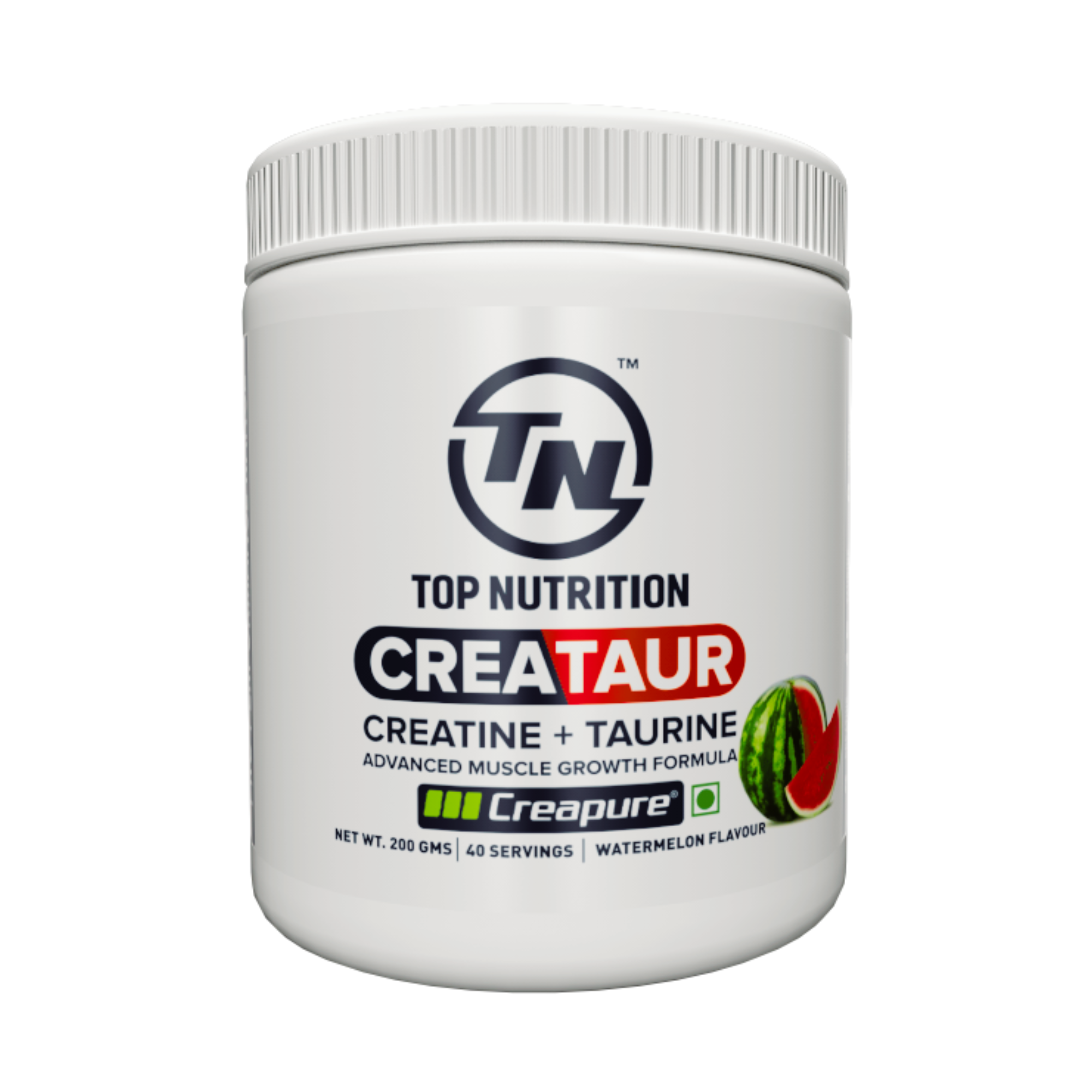
Top Nutrition Creatine is the best because it contains pure creatine monohydrate, which is the most studied form of creatine and is proven to be safe and effective.
Additionally, it contains no fillers or additives, so you know exactly what you’re getting.
This ensures that you get the most out of your workout and can achieve your fitness goals.
Tips on how to choose the supplement that is right for you
When choosing the right supplement for your workout routine, it is important to consider the benefits of both Creatine and Pre Workout.
Consider your goals
Before choosing a supplement, it’s important to consider what you are trying to achieve.
Creatine is a widely used supplement that helps to increase muscle mass, strength, and power while Pre Workout is designed to give you an extra boost of energy.
Read the label
Once you’ve identified your goals, read the label of the supplement you are considering and make sure it contains ingredients that support those goals.
Consider your budget
Supplements can be expensive, so make sure you consider the cost before making a purchase.
Check for side effects
Supplements can have side effects, so make sure you read up on the potential risks before taking the plunge.
Talk to your doctor
It’s always a good idea to check with your doctor before starting a new supplement.
Creatine Vs Pre Workout Commonly Asked Questions
Is creatine and pre-workout the same?
No, creatine and pre-workout are not the same.
Creatine is a dietary supplement that helps with muscle growth and strength, while pre-workout is designed to provide energy and focus for workouts.
Can creatine be used as a pre-workout?
Yes, creatine can be used as a pre-workout supplement.
Creatine can help improve strength, power, and muscle mass and reduce fatigue during workouts.
It is important to remember to stay hydrated while taking creatine, as it can cause dehydration.
What’s the difference between creatine and pre-workout?
Creatine is a supplement that helps to enhance energy levels, increase muscle mass, and improve exercise performance.
It is usually taken in powder form and dissolved in water or juice.
Pre-workout is a powder or liquid supplement designed before exercise to increase energy, focus, and endurance.
These supplements usually contain caffeine, B vitamins, and other ingredients such as amino acids.
Creatine vs pre workout which is better?
Creatine is a dietary supplement that has been used for decades by athletes and bodybuilders to increase muscle size, strength and performance.
It is one of the most studied supplements on the market and its effects have been proven in numerous clinical studies.
Pre-workout supplements, on the other hand, are usually a combination of stimulants such as caffeine and other ingredients designed to improve energy and concentration during exercise.
While they can provide a short-term boost, they do not offer the long-term benefits of creatine.
Creatine is a safe, natural supplement that can help increase muscle size, strength, and power over time, making it a better choice for athletes and bodybuilders who want to maximize their performance.
Can I take creatine with a pre-workout?
Yes, you can take creatine with a pre-workout.
However, it is important to read labels and follow dosage instructions to avoid any potential side effects.
Pre-workout with Creatine vs without?
Creatine is an amino acid that can help increase muscle mass and strength.
Pre-workout with Creatine can provide an extra boost of energy, allowing you to push yourself harder during your workout, leading to more muscle growth.
Pre-workout without Creatine can still provide a boost of energy, but it may not provide the same level of benefits as when it is combined with Creatine.